How to Teach Shape Attributes Kids Can Actually Remember (Without Losing Your Mind)
Teaching shape attributes to kids can sometimes feel like trying to teach a goldfish to ride a bicycle. Sure, it sounds possible in theory, but practically? Well… you get the picture. But fear not! With the right strategies, engaging activities, and a sprinkle of humor, your young learners will be naming sides, vertices, edges, and faces like little geometry wizards in no time. In this blog, we’re going to explore how to teach shape attributes in a way that kids actually remember — because, let’s face it, there’s nothing more frustrating than reteaching the same shapes over and over like a broken record. Ready? Let’s make shapes fun again!
Why Are Shape Attributes Important? Before we get into the how, a quick reminder: understanding shape attributes is more than just reciting “a square has 4 equal sides.” It’s about developing critical thinking skills, spatial awareness, and setting a solid foundation for future math concepts. The Common Core standards (CCSS.Math.Content.K.G.A.2 and CCSS.Math.Content.K.G.A.3) emphasize naming shapes correctly regardless of orientation or size and distinguishing between 2D and 3D shapes. This is no small feat for little learners, so let’s give them the best tools and tricks.
The Challenge: Kids Forget Shape Names and Attributes You might have noticed: kids can recognize a circle or square when it’s facing them just right, but turn it upside down or rotate it, and suddenly it’s a “funny thing” instead of a square. Same with 3D shapes — a cube is a cube, until it’s “that box” or “the dice.” So how do we help kids remember not just the names but the attributes — sides, vertices, edges, faces — and whether a shape is flat (2D) or solid (3D)?
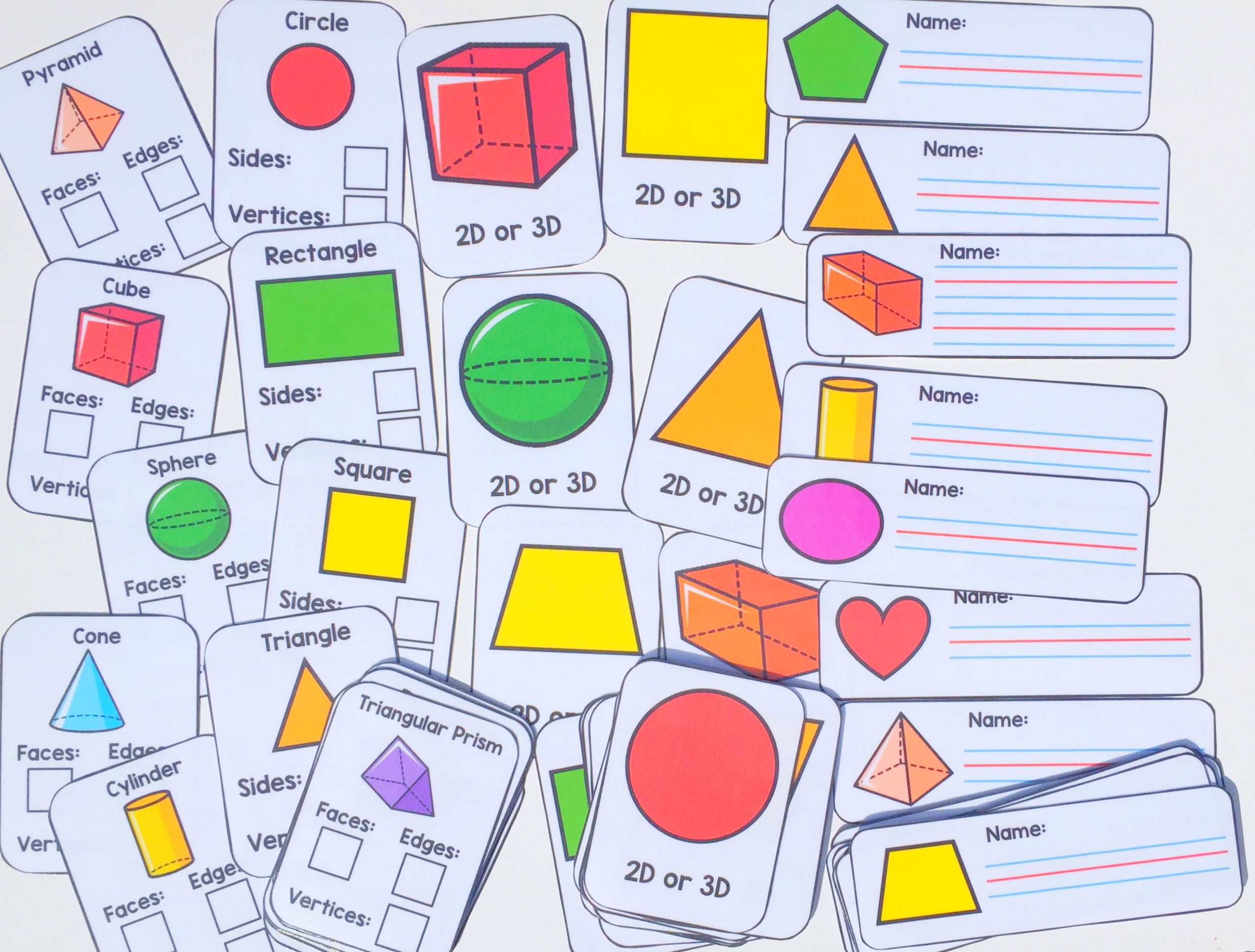
Solution #1: Use Engaging, Hands-On Task Cards If you want kids to stick with shape attributes, you need to get them involved. This is where these 2D and 3D Shape Attributes Task Cards come into play. They’re perfect for:
- Naming and spelling shapes
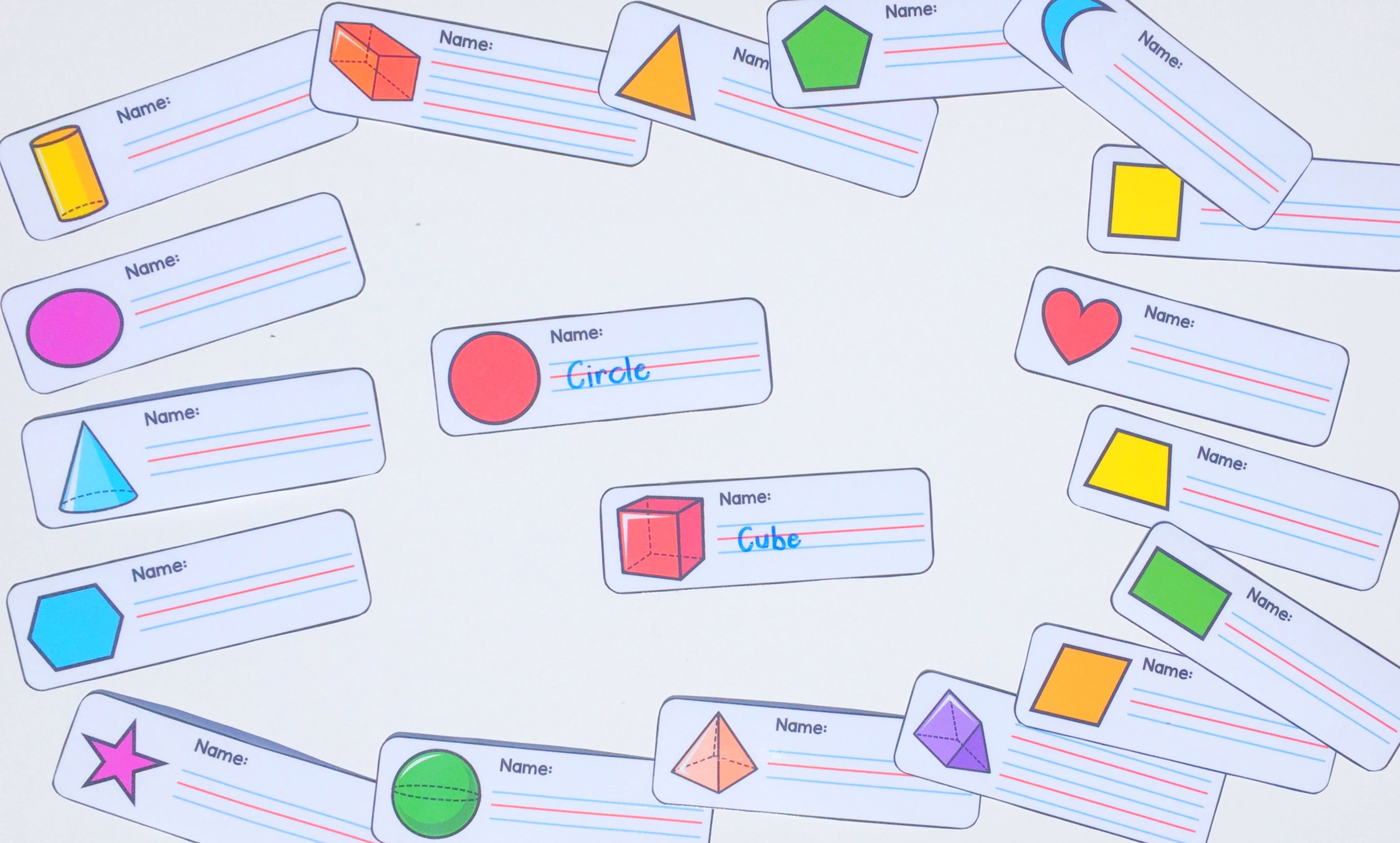
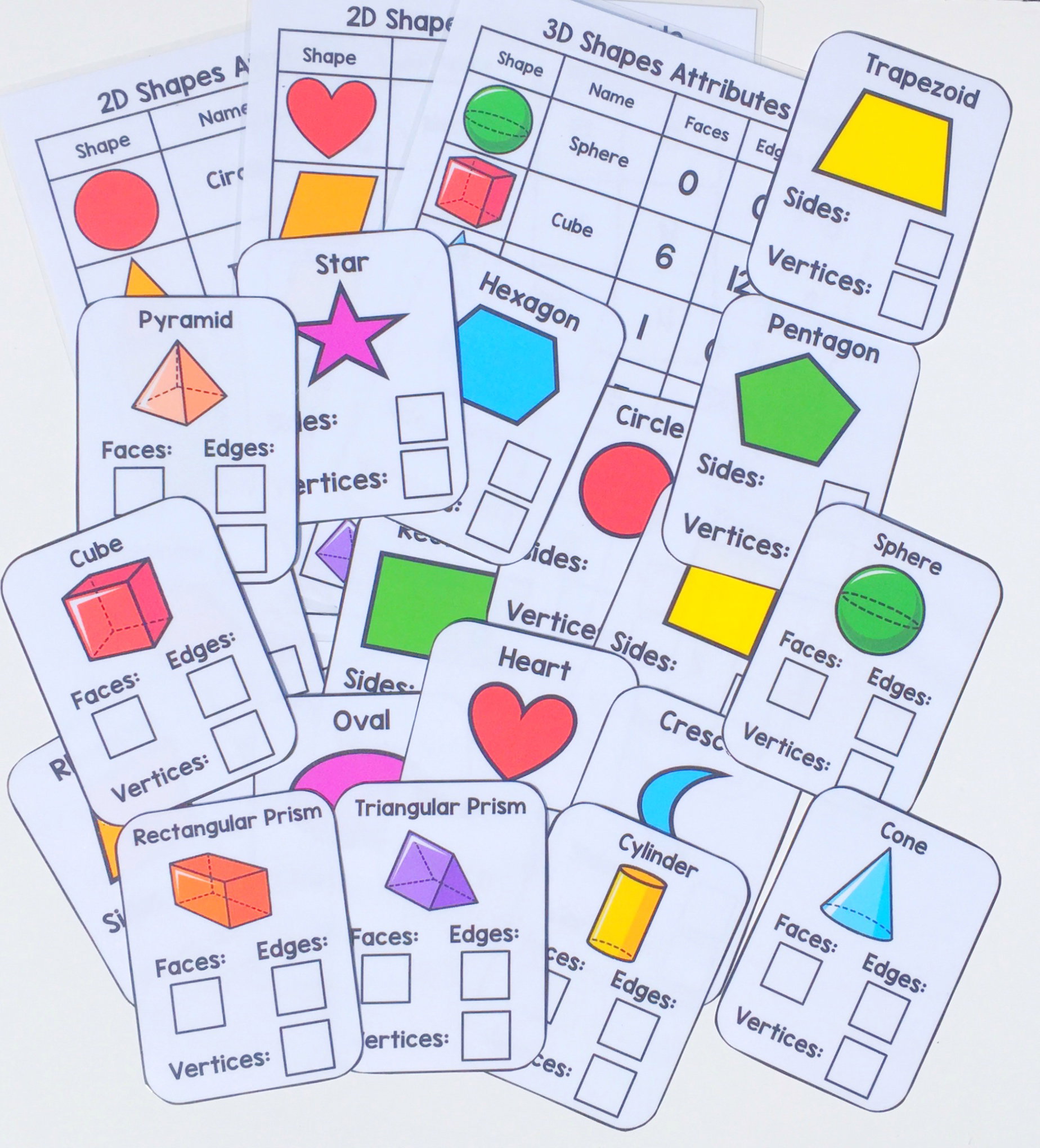
- Filling in shape attributes (number of sides, vertices for 2D; edges, faces, vertices for 3D)
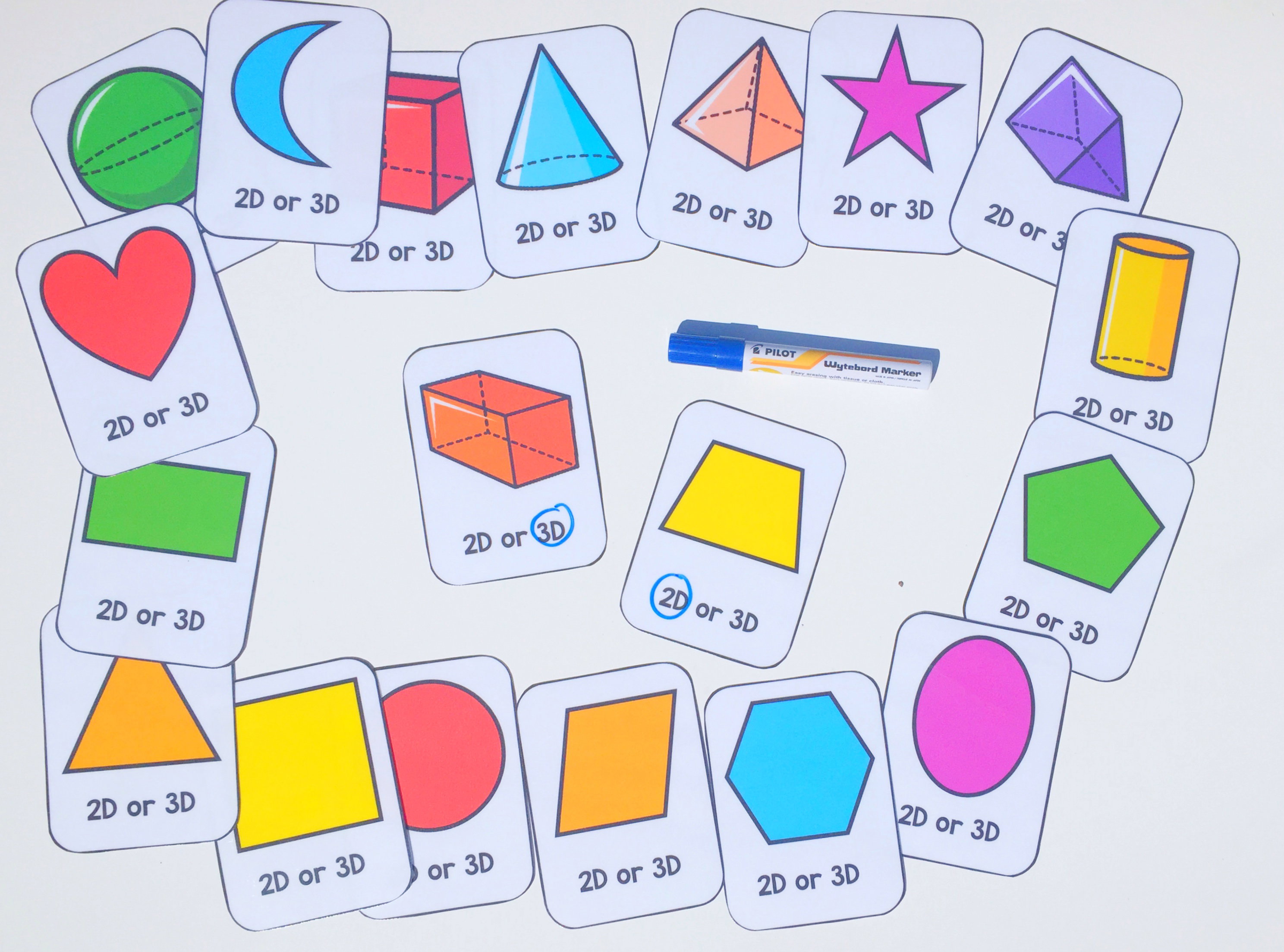
- Identifying if shapes are 2D or 3D
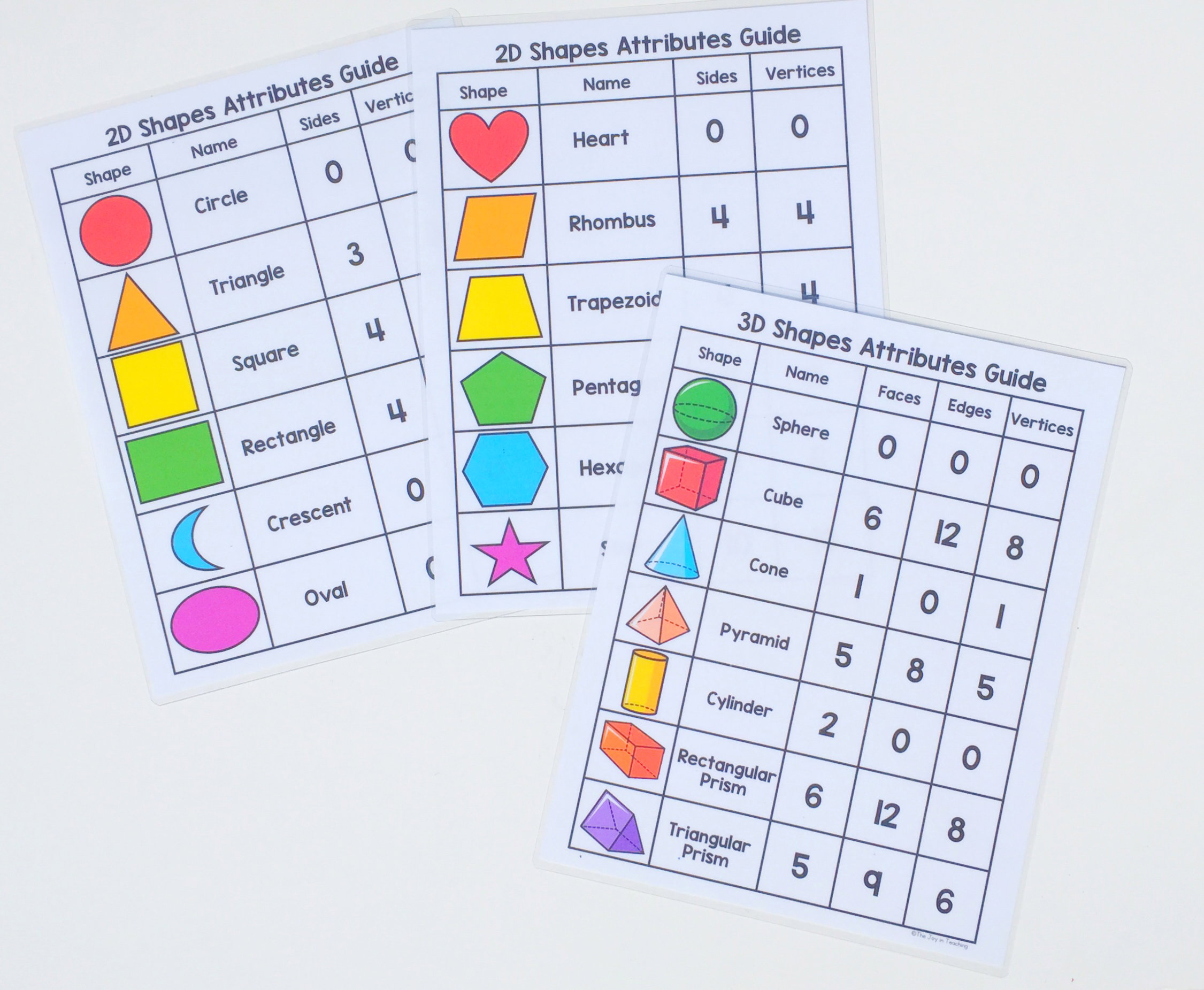
An easy-to-use attribute chart comes with these task cards, making it super simple for kids to self-check and for you to assess.
Teacher shout-out: Kevin Warnimont says, “My students loved this activity. It kept them engaged throughout!” And that’s exactly the kind of engagement you want!
How to Use These Task Cards
1. Center Activity Set up a shape station with the task cards and other shape activities. Kids can work independently or in pairs to name shapes and fill in their attributes.

2. Morning Work Kickstart the day with a few cards to sharpen minds and focus attention.
3. Anchor Chart Use the attribute chart as a visual reference during lessons. It becomes a go-to resource for kids when they forget.
Why This Approach Works
❤️ Engaging Practice: Kids don’t just look at pictures; they write, think, and explore.
❤️ Versatile Use: Whether in small groups, centers, or morning work, these cards fit right in.
❤️ Comprehensive Coverage: Covers both 2D and 3D, with clear attribute details to master.
But Wait — There’s More! Extra Activities to Make Shape Attributes Stick Because variety is the spice of learning, here are some creative, hands-on activities beyond the task cards to really help kids remember shape attributes.
Activity 1: Shape Scavenger Hunt — Find It, Name It, Attribute It! Send kids on a classroom or home scavenger hunt. Their mission? Find objects matching certain shapes and describe their attributes aloud or write them down. Example:
- Find something with 4 sides and 4 vertices — a rectangle? A book cover!
- Find a 3D shape with faces, edges, and vertices — a cereal box (cuboid!).

This brings real-world connections and helps kids see shapes everywhere.
Activity 2: Build-a-Shape with Playdough or Clay Get those little hands busy molding shapes with playdough or clay. Challenge kids to make shapes with the correct number of sides or faces.
- For 2D shapes, roll out flat shapes and count sides and vertices.
- For 3D shapes, create cubes, pyramids, or cylinders.
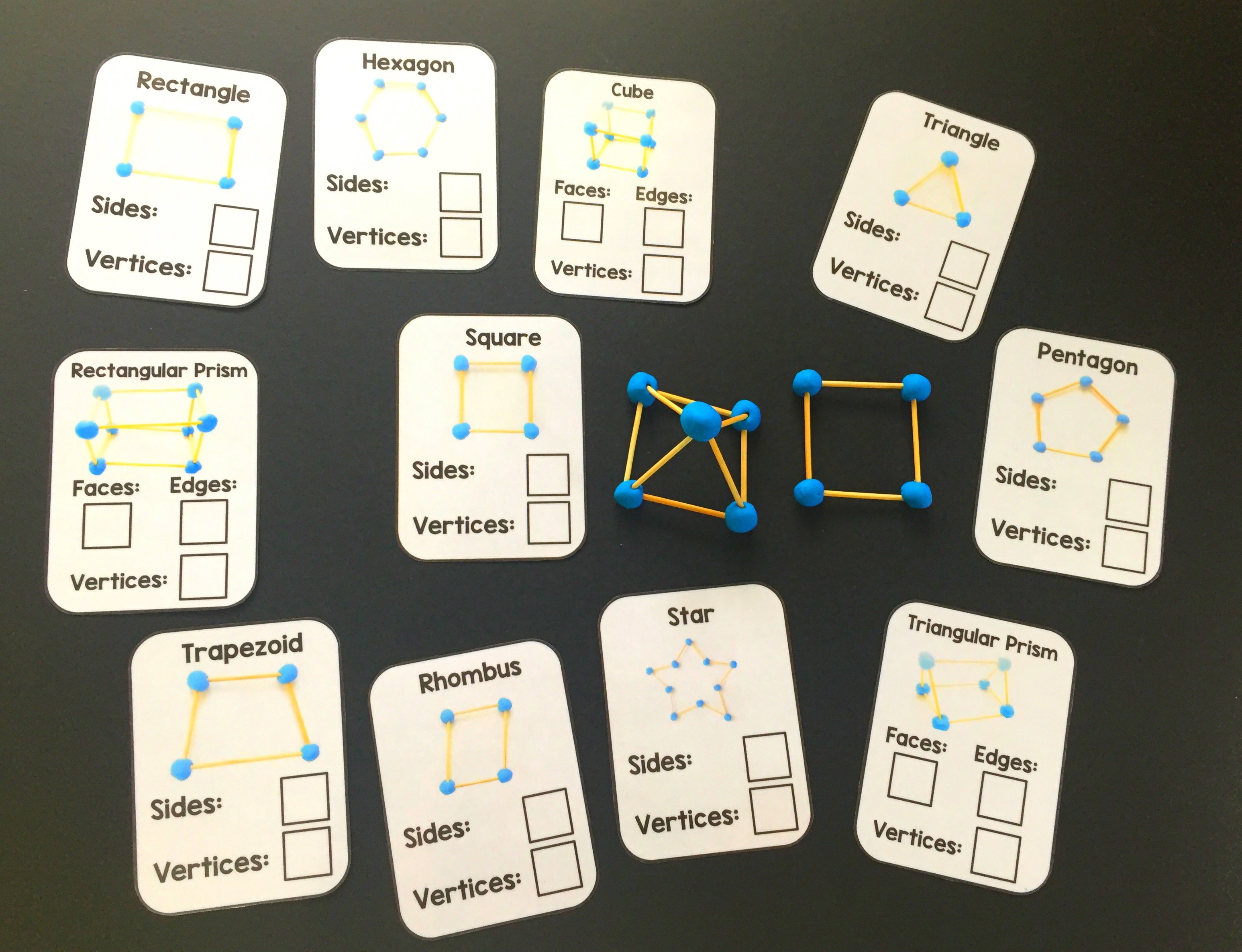
Building 2D and 3D Shapes Task Cards
Bonus: Kids can poke toothpicks or sticks in the shapes to highlight vertices or edges. It’s hands-on geometry — plus a mini motor skills workout!
Activity 3: Shape Attribute Sorting Game Create a sorting mat with two sections: 2D and 3D. Give kids cut-outs or shape blocks and have them sort shapes into the right category. Then, challenge them to list attributes for each. Add a twist: Have a “mystery shape” box where kids pick a shape without looking and describe it based on touch (texture, edges, vertices).

Activity 4: Shape Charades This one’s a classroom favorite! Kids act out the shape’s attributes — for example, holding up 3 fingers for a triangle’s sides or pretending to be a cube by making a box shape with their arms. It’s silly, it’s memorable, and it’s a fantastic way to reinforce learning through movement.

Activity 5: Shape Art Collage Kids create art pieces using cut-out shapes, then label the shapes and their attributes. For example, “My sun has 8 triangles for rays,” or “My rocket has a cone and a cylinder.” This blends creativity and geometry — a win-win!

Activity 6: Digital Shape Exploration Use interactive apps or websites that allow kids to manipulate 2D and 3D shapes. These digital tools can show rotation, let kids count edges and faces, and provide instant feedback. It’s a modern twist that engages today’s tech-savvy learners.

Remember: Repetition with Variation is Key Kids need to encounter shape attributes multiple times in different ways before they truly internalize them. Switching between writing, drawing, building, and playing keeps things fresh and improves memory.
Common Pitfalls & How to Avoid Them
- Don’t rush it: Give kids time to explore shapes at their own pace.
- Use kid-friendly language: Instead of “vertices,” try “corners” for starters.
- Mix 2D and 3D carefully: Teach one set thoroughly before moving to the other to avoid confusion.
Why This Shape Attributes Task Card Bundle Is a Great Help If you’re thinking, “Wow, these activities sound amazing, but where do I get the resources that make planning easy?” — good news! The 2D and 3D Shapes Center Activity - Flashcards, Task Cards, Building Shapes are designed just for you. With multiple task cards covering naming, spelling, attributes, and identification, plus a handy attribute chart, this bundle takes the guesswork out of teaching shapes.
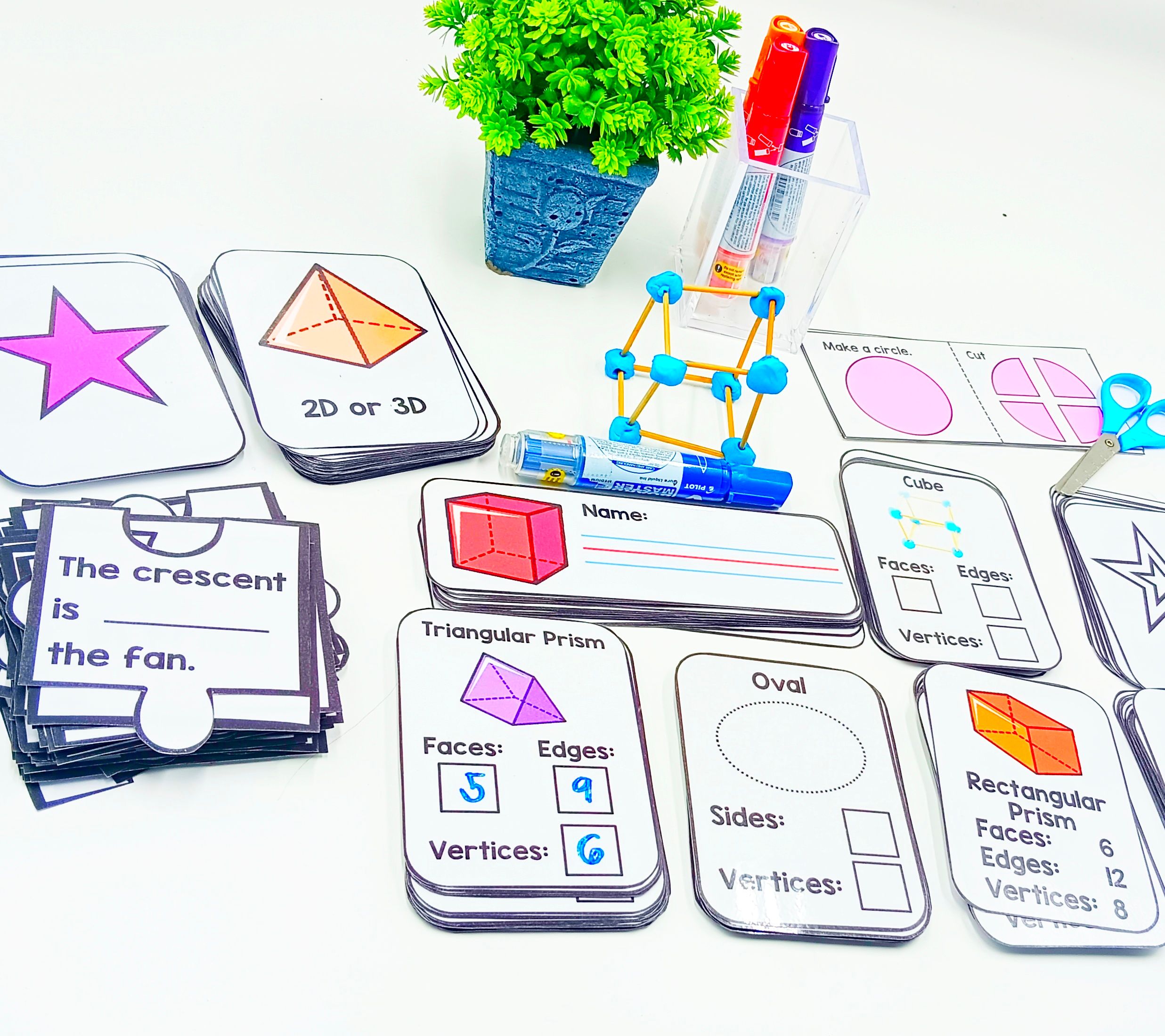
Teachers like Megan W. love it because “it’s great for students with additional needs,” and Amy B. says, “It’s a great resource to teach students about shapes.” It’s versatile, engaging, and covers exactly what kids need — making your life easier and your lessons more effective. And who doesn’t want that?
Quick Tips for Teaching Shape Attributes That Stick
- Use real objects whenever possible.
- Incorporate movement and music.
- Encourage kids to describe shapes in their own words.
- Make mistakes okay — learning is a process!
- Celebrate small wins: “Look at you naming all those sides!”
Wrapping Up Teaching shape attributes doesn’t have to be a chore or a headache. With engaging task cards, hands-on activities, and a sprinkle of creativity (plus a dash of humor to keep you sane), kids will not only learn about shapes but remember what makes each one special. So next time you see a kid staring at a triangle upside down, don’t panic. Just whip out some task cards, grab some playdough, and let the learning adventure begin.
If you’re ready to make shapes unforgettable (for you and your students), check out the 2D and 3D Shapes Center Activity - Flashcards, Task Cards, Building Shapes — the perfect sidekick for your math lessons!
Follow Me for More Teaching Tips with Joy For more tips, resources, and a daily dose of teaching joy, follow me on:
Got questions or want to share your success stories? Drop me an email at thejoyinteaching@gmail.com. I love hearing from fellow educators and parents! Happy Teaching!
Joy Medalla
The Joy in Teaching 💛