How to Teach Fact Families of Multiplication and Division: A Fun and Engaging Guide for Teachers
Welcome, math explorers! Have you ever noticed how numbers can behave like a family—connected, organized, and related to each other in different ways? Today, we’re exploring Multiplication and Division Fact Families. This concept helps students understand how multiplication and division are connected, while also building strong fluency in basic math facts. Whether you’re a parent helping at home or a teacher in the classroom, this guide offers practical tips, fun ideas, and simple strategies to make math more engaging and meaningful. Let’s get started!
What Are Fact Families?
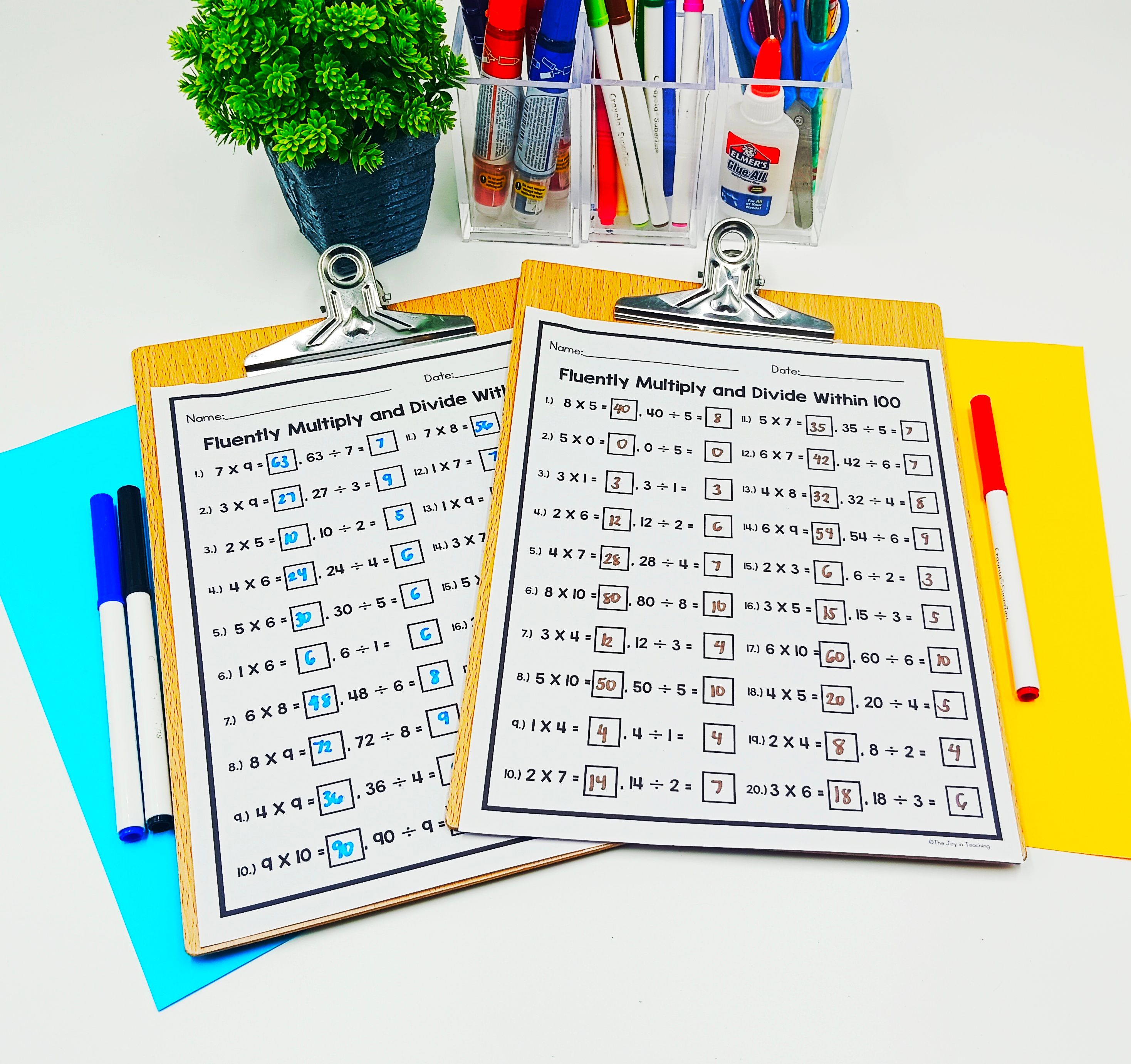
Fact families are groups of related math facts that use the same numbers. In multiplication and division, a fact family includes two multiplication equations and two division equations using the same three numbers.
Example: 2, 4, and 8
- 2 × 4 = 8
- 4 × 2 = 8
- 8 ÷ 2 = 4
- 8 ÷ 4 = 2
These show how the same numbers are connected in different ways.
Why Teach Fact Families?
Teaching fact families helps students:
- Build understanding of the inverse relationship between multiplication and division
- Improve fluency with basic math facts (within 100)
- Strengthen problem-solving skills by finding missing numbers in equations
Step-by-Step Guide to Teaching Fact Families
Step 1: Introduce the Concept
Explain that numbers in a fact family are related. Use simple objects like toys, candies, or fruits to demonstrate grouping and sharing.
Step 2: Show the Relationship
Help students see how multiplication and division are connected. Emphasize that all four equations come from the same set of numbers.
Step 3: Use a Visual Model
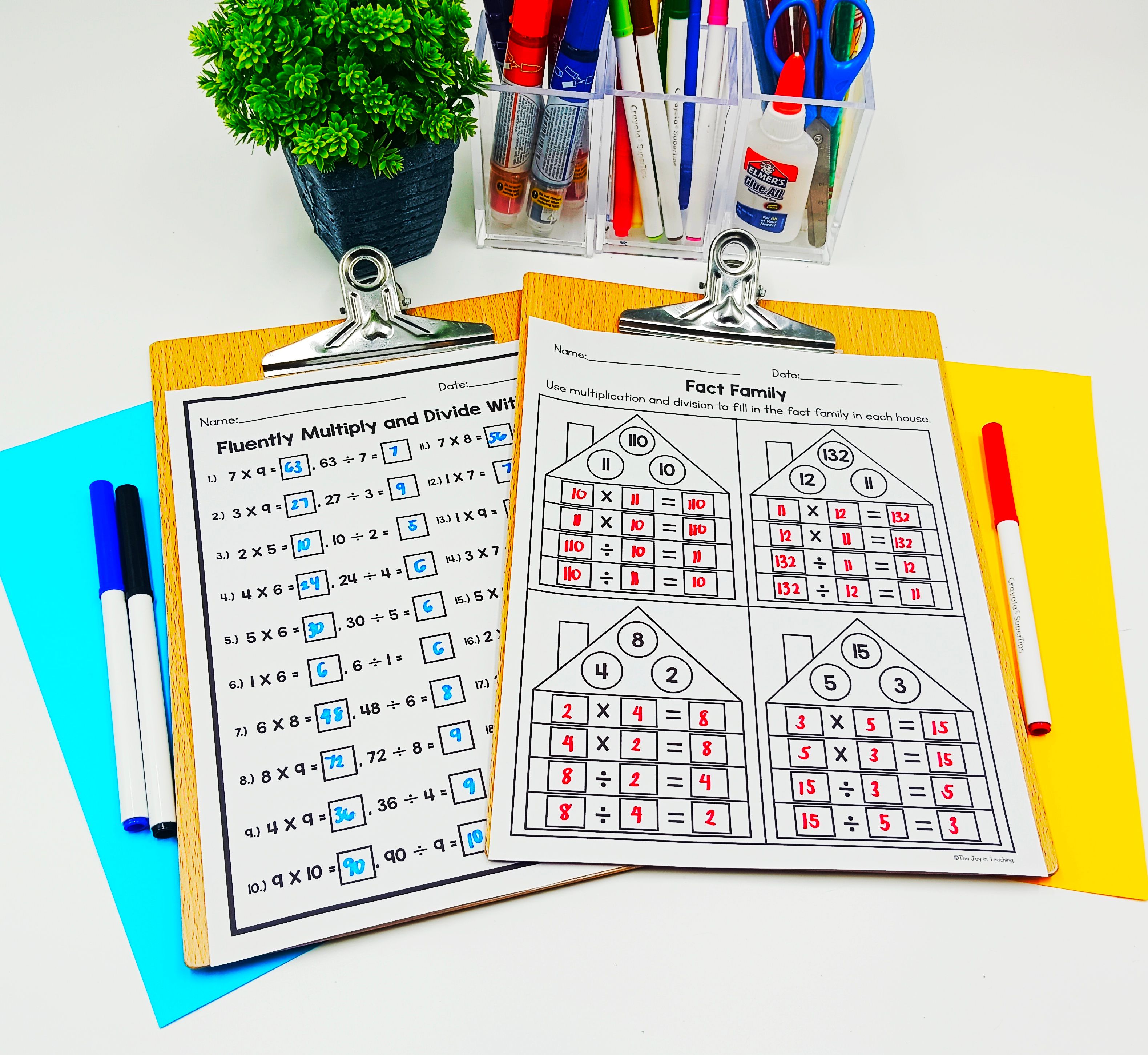
Introduce a “fact family house” where:
- The roof shows the product
- The bottom shows the factors
This helps students visualize the relationship clearly.
Step 4: Practice with Examples
Guide students through different fact families, such as:7 × 6 = 42
6 × 7 = 42
42 ÷ 7 = 6
42 ÷ 6 = 7
Step 5: Reinforce Learning
Provide repeated practice through classwork, centers, or homework to strengthen understanding.
Making Fact Families Fun
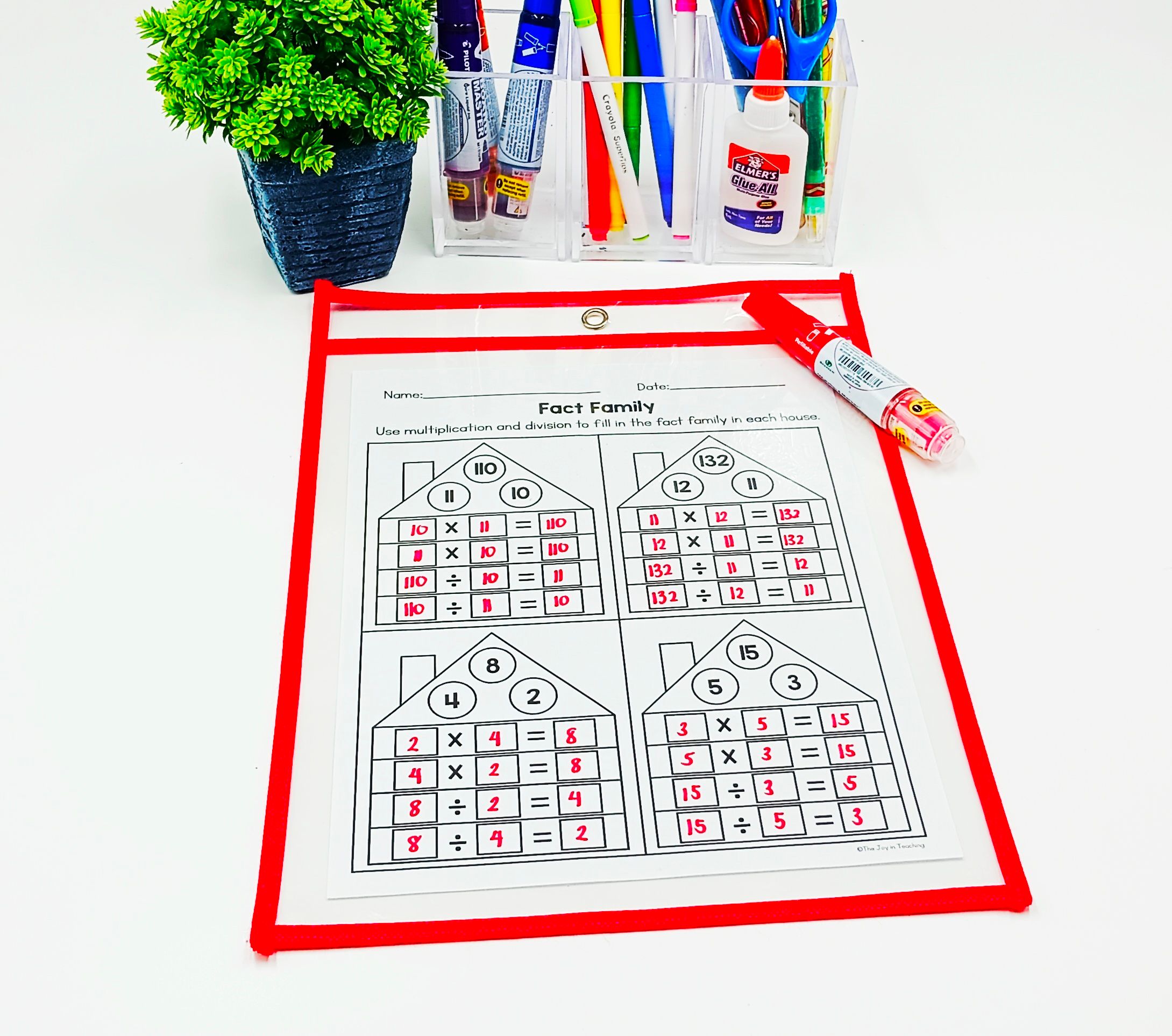
Use Visual Aids
Charts, drawings, and “fact family houses” help students see patterns more clearly.
Turn It Into a Game
Try activities like:
- Relay
- Speed challenges
Classroom Activity Ideas
- Fact family crafts (decorate number houses)
- Cut-and-paste sorting activities
- Coloring fact family worksheets
- Math centers for independent or group work
- Short assessments or review tasks
✨ Worksheet Resource (Suggested Use)
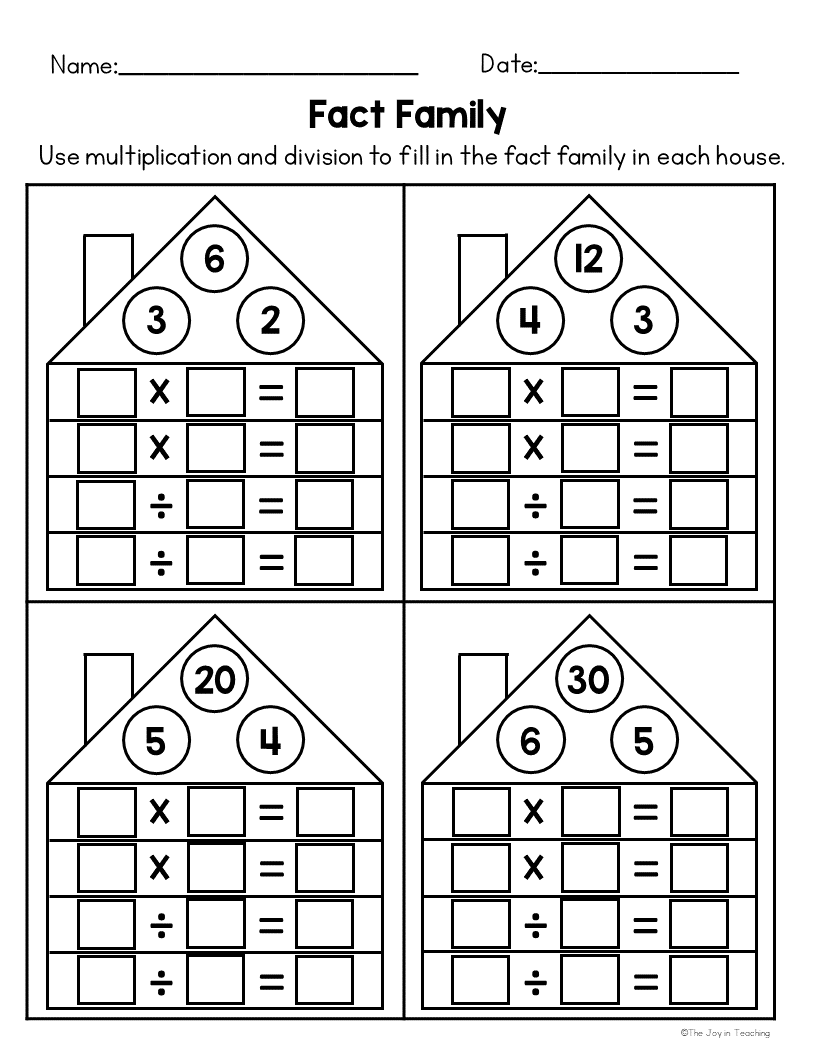
To support teaching, you may use multiplication and division fact family worksheets as extra practice material. These can include:
- Fact family house activities
- Practice pages for multiplication and division within 100
- Answer keys for easy checking
- Options for homework, centers, or review work
- Printable PDF format for classroom use
Get more of this!
These resources work best when used as reinforcement after introducing the concept, not as the main teaching tool.
Conclusion
Fact families make multiplication and division easier to understand by showing how numbers are connected. With visual models, hands-on activities, and consistent practice, students can build confidence and fluency in math. Keep learning light, interactive, and fun—and your students will start seeing math in a whole new way. Happy teaching!
Follow Me for More Teaching Tips with Joy For more tips, resources, and a daily dose of teaching joy, follow me on:
Got questions or want to share your success stories? Drop me an email at thejoyinteaching@gmail.com. I love hearing from fellow educators and parents! Happy Teaching!
Joy Medalla
The Joy in Teaching 💛